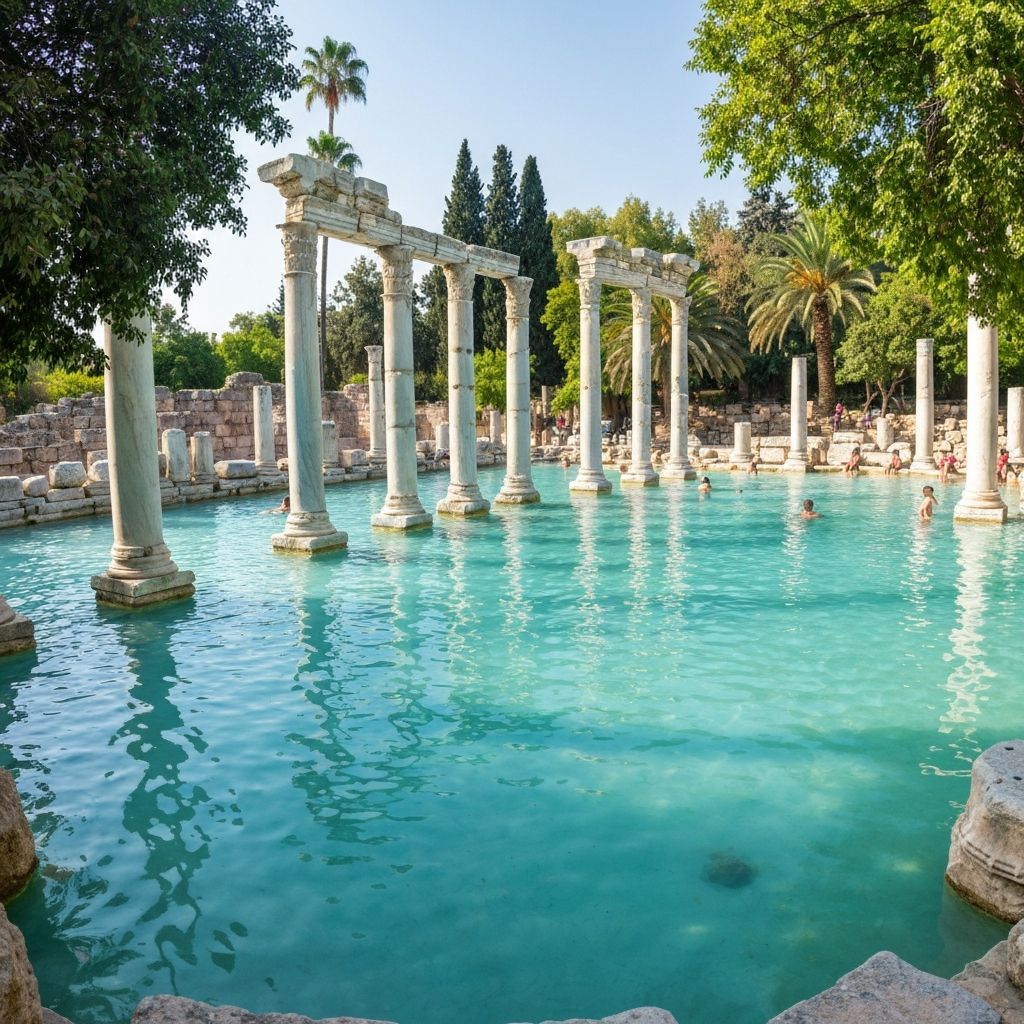
Hierapolis Ancient Pool: A Dip in Cleopatra's Historical Thermal Waters
Swim among submerged Roman columns in one of the world's most unique thermal experiences.
36°C (97°F)
Water Temperature
Year-round thermal warmth
Calcium-rich
Mineral Content
Therapeutic properties
08:00 - 19:00
Opening Hours
Daily (summer hours)
Required
Separate Entry
Additional fee applies
The Legendary Cleopatra's Pool
Origins and Myth:While there's no historical evidence that Cleopatra ever visited Hierapolis, local legend holds that the Egyptian queen bathed in these very waters during her travels through Anatolia. The name has stuck, adding a touch of romantic mythology to an already extraordinary site.
The pool that exists today was formed naturally when an earthquake in the 7th century CE toppled the columns of an ancient Roman colonnade into the thermal spring. Rather than remove the debris, the columns were left where they fell, creating the unique underwater landscape visitors enjoy today.
The Thermal Experience: The water maintains a constant temperature of around 36°C (97°F) throughout the year, making it comfortable for swimming in any season. The mineral-rich waters are believed to benefit skin conditions, circulation, and overall well-being - just as ancient visitors believed two millennia ago.
Swimming Among Ancient Ruins
Submerged Roman Columns and Capitals
The most remarkable feature of Cleopatra's Pool is the collection of ancient marble columns, capitals, and architectural fragments scattered across the pool floor. As you swim, you'll glide over fluted column drums, Corinthian capitals, and carved stone blocks - remnants of the grand colonnade that once stood here.
The water is crystal clear, allowing excellent visibility of these submerged treasures. Many visitors enjoy snorkeling to get a closer look at the ancient stonework, though touching the artifacts is discouraged to preserve them for future generations.
The Unique Geological Formation
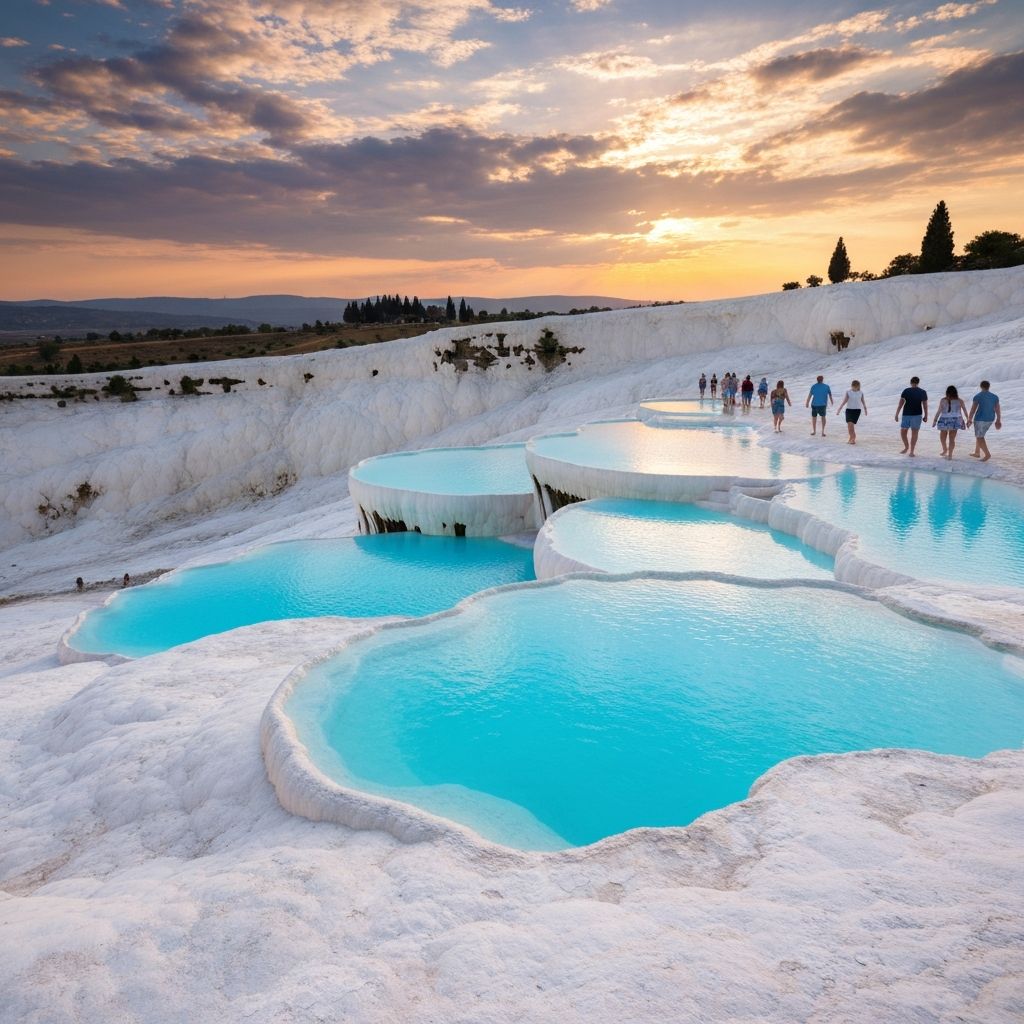
The pool is fed by the same thermal springs that created the famous white travertine terraces of Pamukkale. Carbon dioxide bubbles rise from the bottom, creating a champagne-like fizzing effect around swimmers. The mineral content leaves a slight tingling sensation on the skin.
The water flows continuously, keeping the pool clean and fresh. After emerging, many visitors notice their skin feels notably soft - a testament to the mineral content that made these waters famous throughout the ancient world.
Visitor Information and Practical Tips
Cleopatra's Pool requires a separate entrance fee in addition to the main Hierapolis-Pamukkale ticket. Prices are subject to change, so check current rates at the ticket office.
Children under certain ages may enter free or at reduced rates.
Modern changing rooms, showers, and lockers are available on site. Towels can be rented if you forget to bring your own.
There's also a cafe area where you can relax after your swim.
Early morning (8-10 AM) or late afternoon (after 4 PM) offers the most peaceful experience with fewer crowds.
Weekdays are generally less busy than weekends and holidays.
Tips for a Perfect Visit
- 1.Bring swimwear - You'll need a swimsuit to enter the pool. Modest swimwear is recommended.
- 2.Water shoes are helpful - The pool floor has rocky areas and ancient stone fragments.
- 3.Bring waterproof camera - The submerged ruins make for incredible underwater photos.
- 4.Allocate 1-2 hours - This allows time to swim, relax, and enjoy the unique atmosphere.
- 5.Visit the ruins first - Explore the archaeological site before cooling off in the pool.