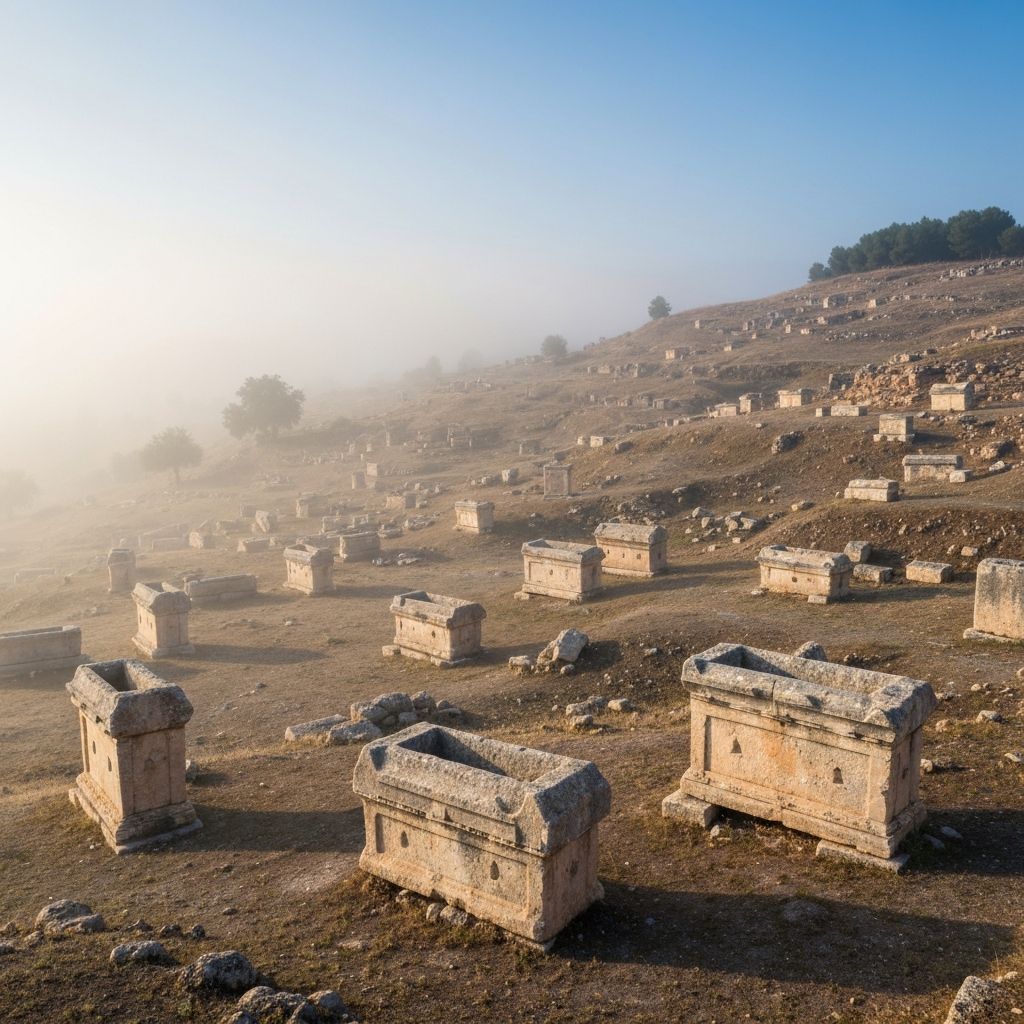
Necropolis of Hierapolis: An Extensive Ancient Cemetery
One of the largest and best-preserved ancient burial sites in the world.
The Scale and Significance of the Necropolis
One of the Largest Ancient Cemeteries: Stretching nearly 2 kilometers along both sides of the ancient road leading north from Hierapolis, the necropolis contains over 1,200 tombs dating from the Hellenistic period through late antiquity. It represents one of the most extensive and well-preserved ancient burial grounds in all of Anatolia.
The necropolis grew organically over centuries as Hierapolis developed from a small settlement into a major Roman city. The variety of tomb types reflects the changing burial customs, religious beliefs, and social structures across different eras.
Insights into Ancient Society: Beyond their architectural interest, these tombs provide invaluable information about daily life in ancient Hierapolis. Inscriptions reveal names, professions, and family relationships, while relief carvings depict clothing, tools, and symbols of social status.
1,200+
Documented Tombs
2 km
Total Length
600+
Years of Use
4
Major Tomb Types
Types of Tombs and Burial Practices
The diverse tomb architecture reflects centuries of evolving burial customs.
Circular earthen mounds covering underground burial chambers, common in the Hellenistic period. These represent some of the earliest burials at the site.
Stone coffins, often elaborately decorated with relief carvings depicting mythological scenes, garlands, and inscriptions identifying the deceased.
Small temple-like structures designed to resemble houses, reflecting the belief that the dead continued a domestic existence in the afterlife.
Underground or semi-underground rooms cut into the rock, often containing multiple burials from the same family across generations.
Archaeological Discoveries and Interpretations
Notable Burials and Artifacts
Excavations have uncovered a wealth of funerary objects including jewelry, glassware, coins, and personal items. Many sarcophagi feature beautifully carved reliefs depicting scenes from Greek mythology - Medusa heads to ward off evil, Eros figures symbolizing the journey to the afterlife, and garlands representing eternal life.
Inscriptions on the tombs provide fascinating glimpses into daily life. We learn of merchants, craftsmen, physicians, and city officials. Some tombs include detailed instructions about who may be buried there and penalties for violations - early evidence of ancient property law.
The Role of Thermal Waters in Funerary Rites
The unique location of Hierapolis next to the thermal springs influenced burial practices in interesting ways. Some scholars believe that people came to Hierapolis specifically to die, hoping that the sacred healing waters might cure them - and if they didn't, at least they would be buried in holy ground.
The concentration of elaborate tombs suggests that being buried at Hierapolis carried special religious significance. The proximity to the Plutonium - the "gate to the underworld" - may have made this an especially desirable final resting place for those seeking a favorable passage to the afterlife.
Walking Through the City of the Dead
Today, visitors can walk along the ancient road that passes through the necropolis, much as funeral processions would have done two millennia ago. The tombs line both sides of the path, creating an eerie yet fascinating landscape of ancient monuments.
The best time to visit is early morning or late afternoon when the warm light creates dramatic shadows among the stone monuments. Allow at least an hour to walk the main section, though archaeology enthusiasts could easily spend half a day exploring the various tomb types and reading inscriptions.
The northern necropolis, located outside the ancient city walls near the Byzantine Gate, contains the oldest and most elaborate tombs. The southern section, closer to the main archaeological site, is more easily accessible and sees more visitors.