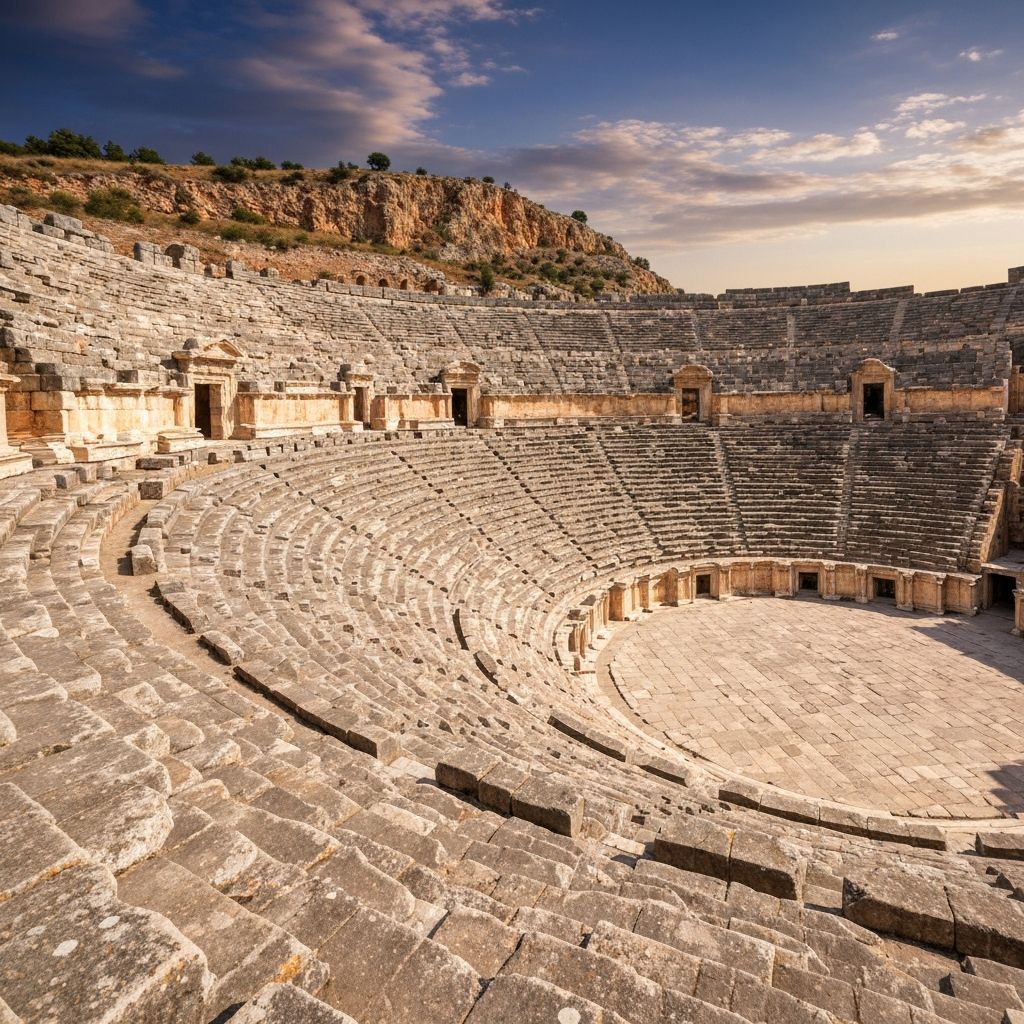
The Splendor of Hierapolis: Exploring the Ancient Theater
A marvel of Roman engineering with stunning views over Pamukkale's travertine terraces.
15,000
Seating Capacity
Spectators at full capacity
100 meters
Diameter
Of the cavea (seating area)
2nd Century CE
Construction
During Roman Imperial period
50+
Rows of Seats
Divided into upper and lower sections
A Monument to Roman Engineering
Construction and Capacity
The Hierapolis theater is one of the most impressive ancient theaters in Turkey, rivaling even the famous theater at Ephesus. Built during the reign of Emperor Hadrian in the early 2nd century CE, it was later expanded under Septimius Severus to accommodate up to 15,000 spectators.
The theater takes advantage of the natural slope of the hillside, with the cavea (seating area) carved directly into the terrain. This construction method, typical of Roman theater design, provided both structural stability and excellent acoustics.
Architectural Features and Decoration
What sets the Hierapolis theater apart is its remarkably well-preserved scaenae frons (stage building facade). The two-story structure features elaborate columns, niches, and relief panels depicting mythological scenes, including the birth of Dionysus and Apollo playing the lyre.
The orchestra area, semi-circular in the Roman fashion, still displays remnants of its original marble paving. The theater's position offers spectators breathtaking views of the Lycus Valley and the famous white travertine terraces of Pamukkale.
Performances and Public Life
Gladiatorial Contests and Theatrical Plays: The theater served as the cultural heart of Hierapolis, hosting a variety of performances that were central to Roman social life. While primarily designed for theatrical performances - tragedies, comedies, and musical shows - the theater may have also hosted gladiatorial contests during certain periods.
Religious Festivals:Given Hierapolis's sacred nature, the theater likely played an important role in religious festivals, particularly those honoring Apollo and Dionysus. The elaborate mythological reliefs on the stage building reflect the deep connection between theater and religious worship in the ancient world.
Social Gathering Space: Beyond entertainment, the theater functioned as a crucial public space where citizens gathered for political assemblies, public announcements, and communal celebrations. It was, in many ways, the beating heart of civic life in Hierapolis.
Restoration Efforts and Present-Day Experience
Preserving a Historical Treasure
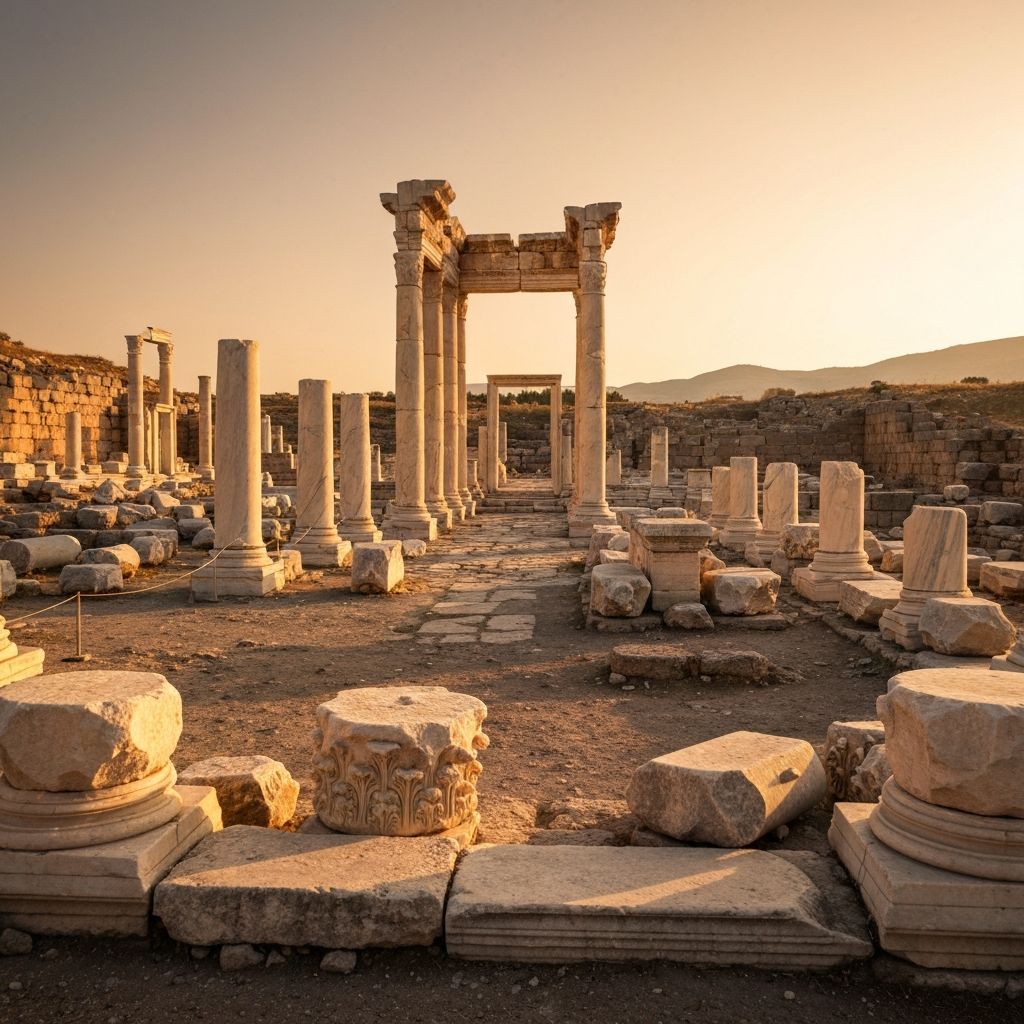
The Italian Archaeological Mission, working at Hierapolis since 1957, has undertaken extensive restoration work on the theater. Fallen columns have been re-erected, the stage building partially reconstructed, and the seating areas stabilized to prevent further deterioration.
Visiting the Theater Today
Today, visitors can climb the ancient stone steps and sit where Roman spectators once watched performances nearly two millennia ago. The theater is best visited in the early morning or late afternoon when the light is softest and the crowds are thinner.
From the upper rows, you'll enjoy panoramic views across the archaeological site and the stunning white terraces of Pamukkale beyond. The climb is steep but worthwhile - a moment to sit in contemplative silence in this ancient space is truly unforgettable.