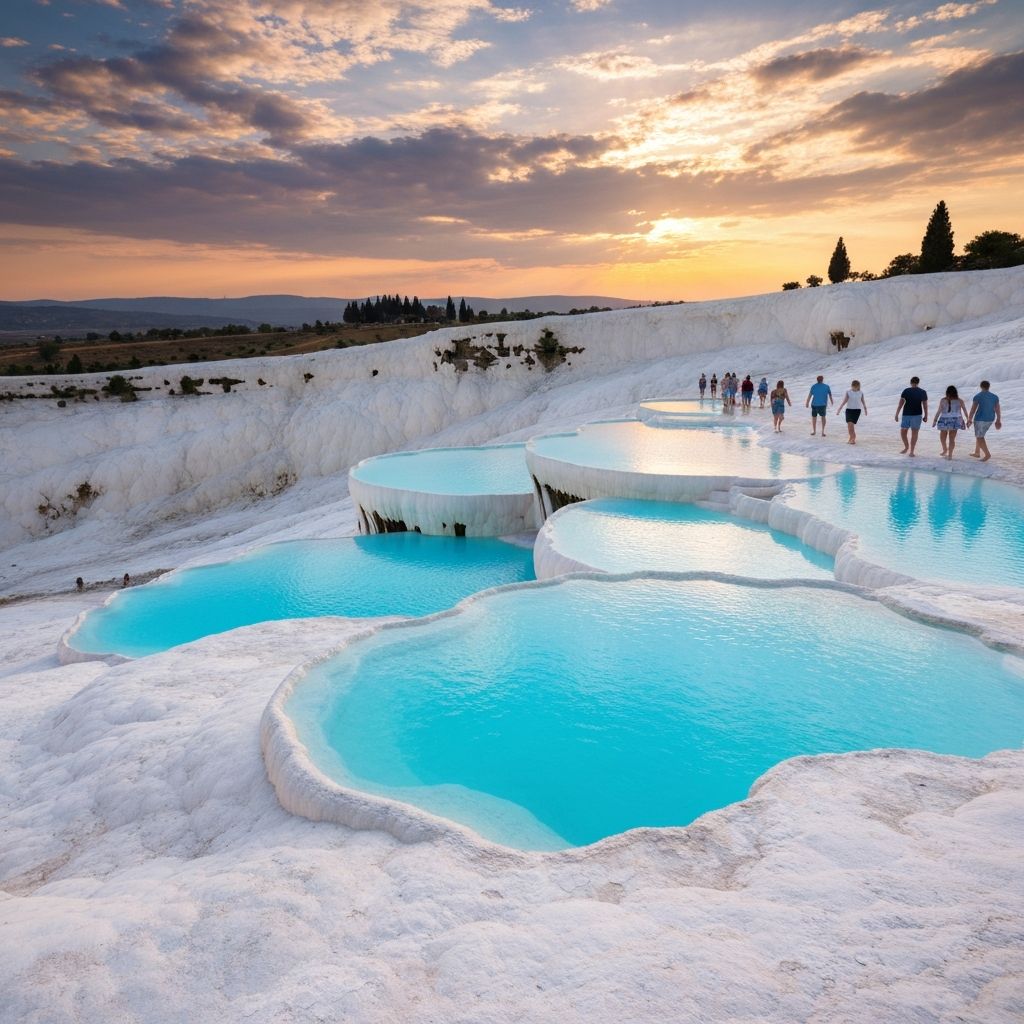
Pamukkale and Hierapolis: The Ultimate Travel Guide
Plan your perfect visit to Turkey's natural and historical wonder.
A UNESCO World Heritage Site Duo
Pamukkale, meaning "Cotton Castle" in Turkish, and the ancient city of Hierapolis together form one of Turkey's most remarkable destinations. This unique UNESCO World Heritage site combines stunning natural beauty with rich archaeological heritage, offering visitors an experience unlike any other.
Whether you're drawn by the otherworldly white terraces, the therapeutic thermal waters, or the ancient Roman ruins, this guide will help you plan an unforgettable visit.
Exploring the Pamukkale Travertines
The Geological Wonders: The dazzling white travertine terraces were formed over thousands of years as calcium-rich thermal waters flowed down the hillside, depositing layers of white calcium carbonate. The result is a surreal landscape of cascading pools and frozen waterfalls.
Thermal Waters and Health Benefits: The thermal waters emerge at temperatures around 36°C (97°F) and are believed to benefit various skin conditions, circulation, and rheumatic ailments. People have been coming here for healing since ancient times.
What to Do at the Travertines: Visitors can walk barefoot on designated paths through the terraces, wading through shallow thermal pools. The sensation of warm, mineral-rich water and smooth travertine underfoot is unforgettable.
Getting To and Around Denizli
Pamukkale is located about 20 km from Denizli city center. Here are your transportation options.
Denizli Cardak Airport (DNZ) is 65 km away with connections to Istanbul and Ankara.
Izmir Airport (ADB) is about 250 km away with more international connections.
Regular intercity buses connect Denizli to Istanbul (10-12 hours), Izmir (4 hours), and Antalya (3 hours).
Local minibuses run frequently between Denizli and Pamukkale village.
Dolmus (shared minibuses) run regularly from Denizli bus station to Pamukkale village.
Taxis are available but negotiate the fare in advance.
Best Time to Visit
Plan your visit around the weather and crowd levels for the best experience.
Weather: Warm, occasional rain
Crowds: Moderate
Weather: Hot, sunny
Crowds: Very crowded
Weather: Pleasant, mild
Crowds: Moderate
Weather: Cool, some rain
Crowds: Low
Accommodation Options
Pamukkale Village: The most convenient base, with options ranging from budget guesthouses to mid-range hotels. Many feature their own thermal pools, allowing you to enjoy the waters outside of visiting hours.
Karahayit: A nearby village known for its red thermal waters (iron-rich), offering thermal resort hotels and spa facilities. Great for those seeking a more relaxing, spa-focused experience.
Denizli City:A larger city with more amenities and chain hotels. Better for those who prefer urban conveniences, though you'll need to commute to Pamukkale.
Book hotels with thermal pools for the best experience.
Stay overnight to visit the site at sunrise or sunset when crowds are minimal.
Many Pamukkale hotels offer free shuttles to the site entrance.
In high season (summer), book well in advance.
Food and Local Cuisine
The Denizli region offers delicious Turkish cuisine with local specialties. Don't miss Denizli kebab, slow-cooked lamb served with local bread, or etli tarhana, a traditional soup made with fermented grain. For breakfast, try tahinli pide, a sweet flatbread with tahini.
Restaurants in Pamukkale village cater to tourists with familiar international dishes, but venture into Denizli city for more authentic local food. Many hotels include breakfast buffets with traditional Turkish spreads.
What to Bring
Pack smart for the most comfortable visit to Pamukkale and Hierapolis.
Comfortable Shoes
For exploring the extensive ruins - but you'll go barefoot on the travertines.
Swimwear
For Cleopatra's Pool and wading through the travertine terraces.
Sun Protection
Hat, sunglasses, and sunscreen - the white terraces reflect sunlight intensely.
Camera
The scenery is spectacular - waterproof options are great for the pools.
Responsible Tourism
The travertine terraces are fragile natural formations that have been damaged by uncontrolled tourism in the past. Today, strict regulations help protect this unique landscape. Please follow these guidelines:
- 1.Walk only on designated paths and in designated pool areas
- 2.Remove shoes before entering the travertine areas
- 3.Do not use soap or apply sunscreen before entering the pools
- 4.Take all trash with you - help keep this site pristine
- 5.Respect the archaeological ruins - do not climb on structures