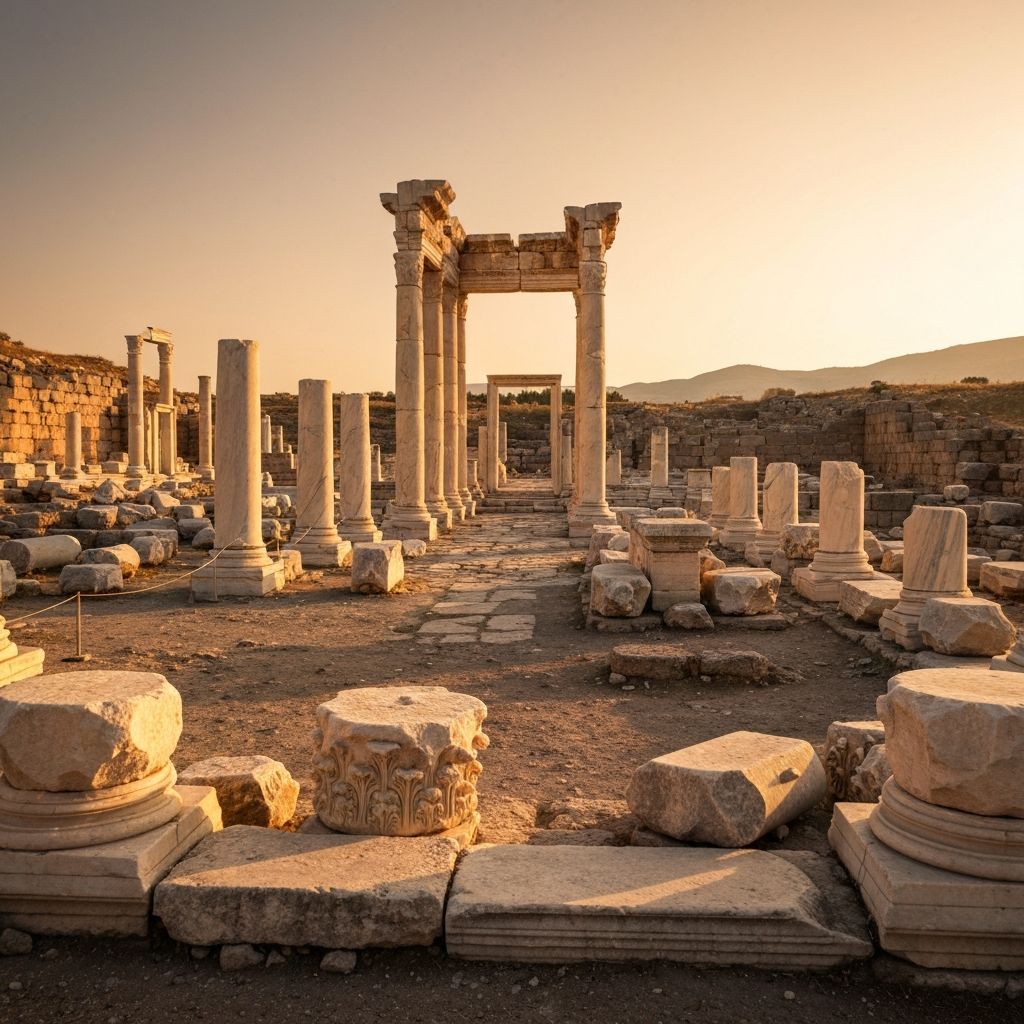
The Enduring Legacy: A Detailed History and Timeline of Hierapolis
The history of Hierapolis spans over two millennia, from its founding as a modest Hellenistic settlement to its zenith as one of the most celebrated spa cities of the Roman Empire. This ancient "Holy City" witnessed the rise and fall of empires, the spread of Christianity, and ultimately, its transformation into one of the world's most significant archaeological sites.
The Hellenistic Foundations
Establishment by the Attalids: Hierapolis was founded around 190 BCE by Eumenes II, the powerful king of Pergamon. The city was strategically positioned to control the fertile Lycus Valley and, more importantly, to harness the remarkable thermal springs that bubbled up from the earth.
The name "Hierapolis" means "Holy City" in Greek, likely referring to the numerous temples dedicated to various deities that were established here from the earliest days. The thermal waters were believed to possess divine healing powers, drawing pilgrims from across the ancient world.
Early Religious and Cultural Life: The city quickly developed a rich religious tradition centered around the cult of Apollo and the mysterious Plutonium - a cave emitting toxic gases that ancient priests claimed was a gateway to the underworld.
The Roman Golden Age
Integration into the Roman Province of Asia: When Attalus III bequeathed his kingdom to Rome in 133 BCE, Hierapolis became part of the vast Roman Empire. Under Roman rule, the city flourished as never before, becoming one of the most celebrated spa destinations in the ancient world.
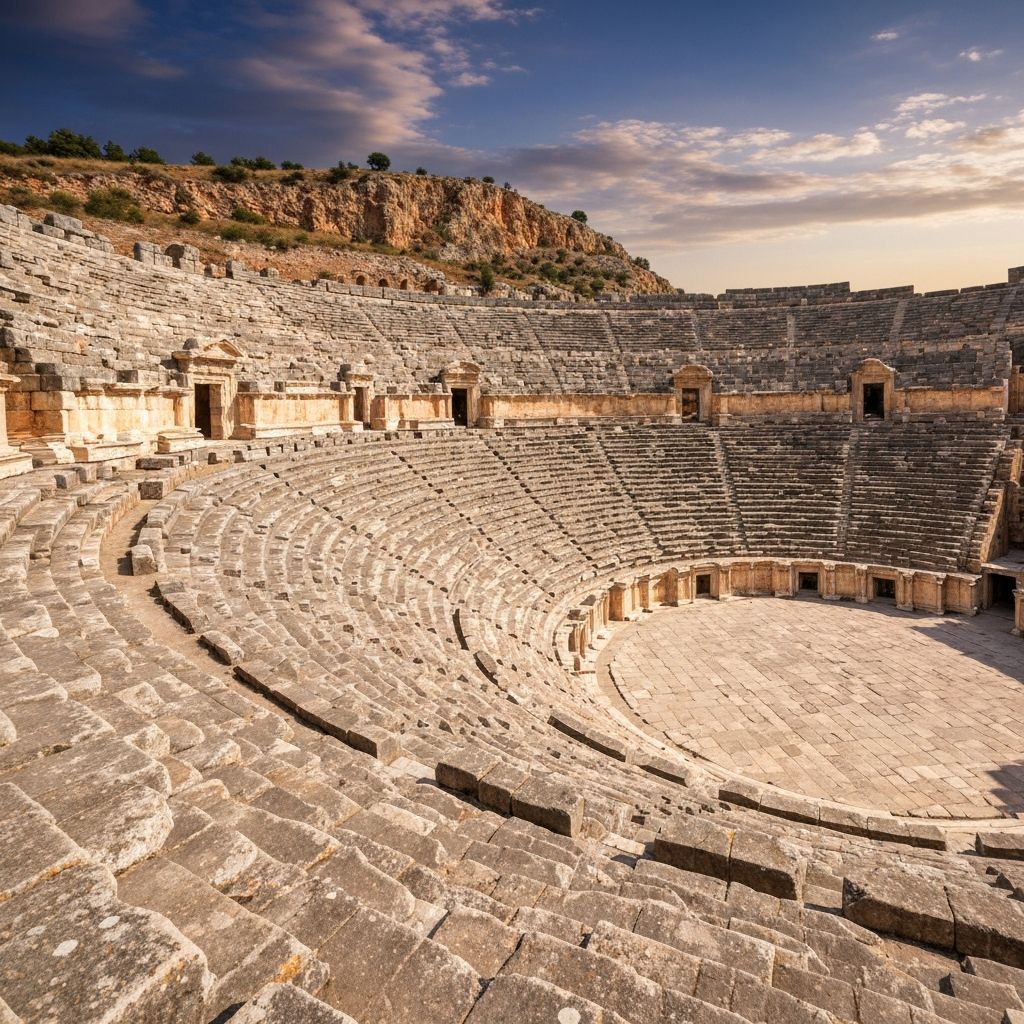
Flourishing Architecture and Infrastructure: The Romans transformed Hierapolis with magnificent public buildings. The grand theater, capable of seating 15,000 spectators, was constructed during this period, along with elaborate bath complexes, a gymnasium, and the impressive Frontinus Gate.
Strategic Importance and Trade: Hierapolis became a major center for textile production, particularly known for its purple-dyed fabrics. The city lay at the crossroads of important trade routes, contributing to its prosperity and cosmopolitan character.
Christianity and the Byzantine Era
Complete Historical Timeline
Key events in the history of Hierapolis from its founding to the present day.
3rd - 2nd Century BCE
The Hellenistic Foundations
Hierapolis founded by Eumenes II of Pergamon as a strategic frontier city
First temples and public buildings constructed around the thermal springs
Attalus III bequeaths the Kingdom of Pergamon to Rome; Hierapolis becomes part of Roman Asia
1st Century BCE - 3rd Century CE
The Roman Golden Age
Major earthquake devastates the city; extensive rebuilding begins under Tiberius
Another earthquake; city rebuilt with expanded theater and bath complexes
St. Philip the Apostle martyred in Hierapolis; city becomes important Christian center
Emperor Hadrian visits; grand building projects initiated
Construction of the magnificent theater with 15,000 seat capacity
4th - 7th Century CE
Christianity and Byzantine Era
Hierapolis becomes an important bishopric with multiple churches built
Martyrium of St. Philip constructed as a major pilgrimage destination
Arab raids begin; city starts to decline as trade routes shift
8th Century - Present
Decline and Rediscovery
Final abandonment after earthquake; city left to nature
German archaeologist Carl Humann begins first systematic excavations
Italian Archaeological Mission takes over excavations
UNESCO designates Hierapolis-Pamukkale as World Heritage Site
Modern Archaeological Excavations
Since 1957, the Italian Archaeological Mission has conducted systematic excavations at Hierapolis, uncovering remarkable treasures and providing invaluable insights into ancient life. Their work continues to this day, with new discoveries regularly adding to our understanding of this extraordinary site.
In 1988, Hierapolis and Pamukkale were jointly inscribed as a UNESCO World Heritage Site, recognizing both the outstanding natural beauty of the travertine terraces and the exceptional historical significance of the ancient city.